notes from liguria, italy
What are we tasting when we know the story?
By Margherita Patrone - Nov 14, 2026 - 4 min read - Issue #20
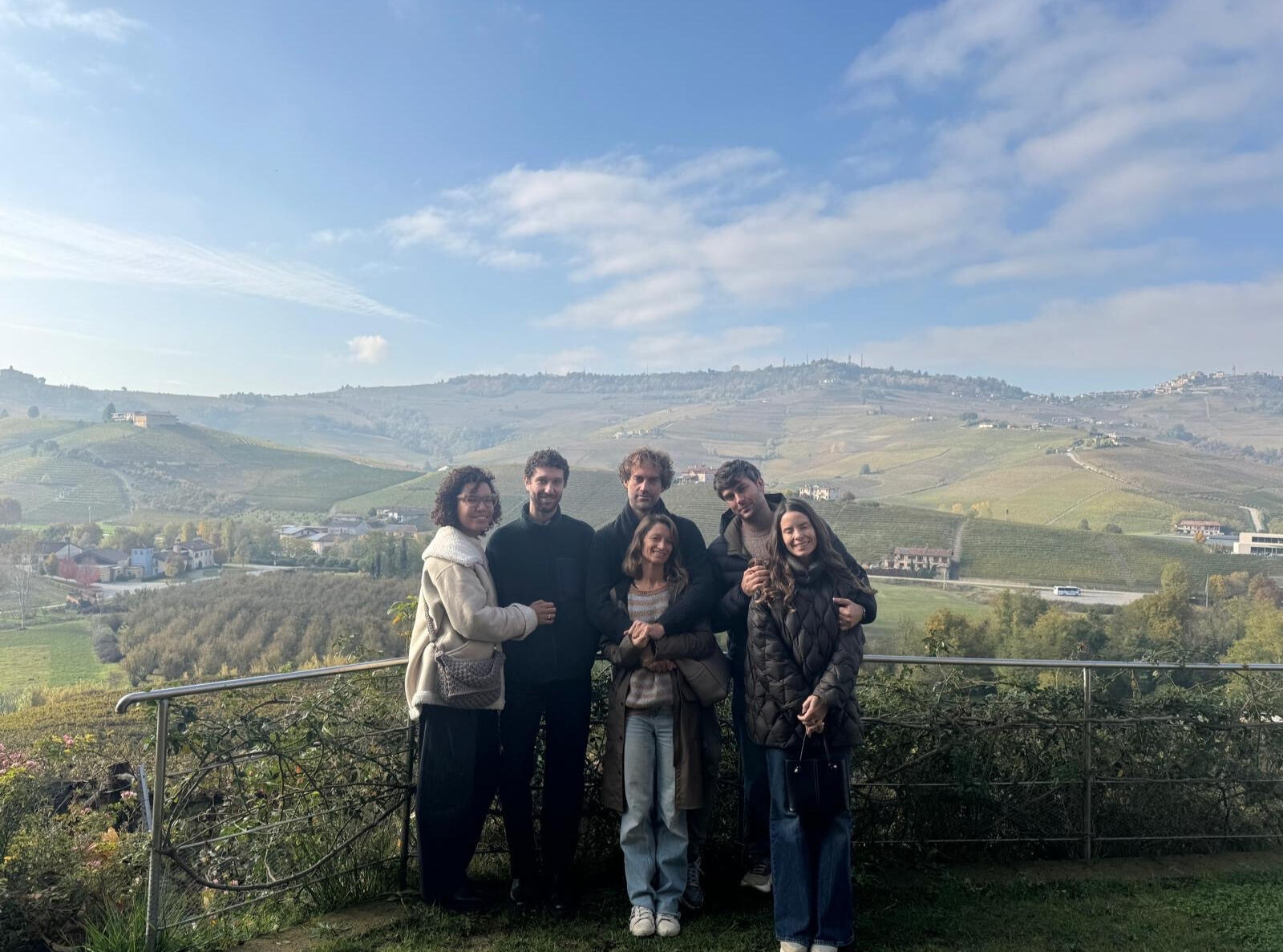
Last weekend was very special because we went white truffle hunting in Piedmont with friends.At Zappi, we get a day off each quarter for mental health, and this one gave us a long weekend together.We were three couples. One came from Paris, another from Rome, and we drove up from Liguria. An hour and a half in the car.I remember thinking how lucky we are to live so close.Massimo and BillyWe went into the woods with our friend Massimo, who hunts for truffles, and his dog Billy.I was looking forward to the truffles. What I keep thinking about is how those two are together.You could see how much Massimo loves Billy. And watching Billy with him, I think the feeling is very much mutual.At some point, Massimo told us he could get twice the price selling his truffles at the market in Alba. He prefers to keep supplying local restaurants.I kept thinking about that on the way home. I spend a lot of time at work thinking about what makes people willing to pay more. Here I was listening to someone explain why he was willing to take less.For Massimo, it mattered where the truffles went after he and Billy found them.Where did this come from?Alba is so closely associated with the prized white truffle that it’s easy to hear the name and picture exactly where it was found. The same species, Tuber magnatum, grows in other parts of Italy and elsewhere in Europe. And a study comparing truffles from Italy, Croatia, Hungary and Serbia found that their aroma compounds varied more among individual truffles from the same site than across the areas sampled.I found that fascinating. We want the name of a place to tell us quite a lot. How good something will be. What it will taste like. Whether it’s worth the price.After spending time with Massimo and Billy, the question I wanted to ask about a truffle was much more specific.Who found this? And where?Two cellars, two very different visitsWe also visited Cascina Pugnane, where the Ghisolfi family traces its roots in the Barolo area back to the 1600s. I loved listening to our guide talk about his family. You could hear how proud he was that they were still there, making wine generations later.Barolo gives the idea of origin a very precise meaning. It’s made from Nebbiolo grown within a defined area covering all or part of eleven municipalities. You can grow Nebbiolo elsewhere. To call the wine Barolo, the grapes have to come from within those boundaries.Then we went to Poderi Luigi Einaudi, where we tasted wine while listening to Ludovico Einaudi. He’s the founder’s grandson and even composed a piece for the estate’s Dogliani wine. Sitting there with a glass and listening to his music felt like such a gift.I loved how different the two visits felt. At Pugnane, I remember the guide’s voice as he talked about his family. At Einaudi, I remember the piano.What else is in the glass?In consumer psychology, we talk about origin as a cue. A place name can give us an idea of what to expect before we’ve tasted anything.In one study, researchers asked two groups to taste the same set of Cabernet Sauvignon wines. One group knew where the wines came from. The other tasted without that information. On average, the people who knew the origins rated the wines more favourably.It made me wonder what I’d remember if we’d tasted those wines blind. I might have picked out a favourite. I would have missed the pleasure of hearing someone tell me what it meant to his family to make it.And when I think about white truffles now, I’ll probably think of Billy first.This week’s experimentThe next time you open a bottle of wine or eat something from a place you’re curious about, try tasting it before looking up the story.Then find out one thing. Where it was made, who made it, or how it ended up on your table.Take another sip or another bite. See what you notice.Until next Saturday,Margherita